I’ve been thinking of a scene from the film Dead Poets Society, in which Robin Williams, playing the part of a kindly English teacher, tells his adoring students this touching line:
“Medicine, business, law and engineering. These are noble pursuits and necessary to sustain life. But poetry, beauty, romance, love – these are what we stay alive for.”
It doesn’t quite work transcribed, but it is a lovely passage. It’s wrong, though. There is no dichotomy between the noble pursuit of sustenance and the glorious prize of beauty. Sustenance done well is the beauty.
I am by no means the first to point this out, but we far too often detach the arts and the sciences. We divide people into creatives and technical, one or the other, when almost everyone is both. Medicine, business, law and engineering are all inherently creative pursuits, and the only thing distinguishing them from poetry and romance is that we have chosen for them to be distinguished.
This has not always been the case, of course. The Victorians, for their many faults, were excellent at this sort of pride in sustenance, and you only need to look at the likes of Crossness Pumping Station or Leeds General Infirmary to understand that, to them, the pursuit of life was the pursuit of beauty.
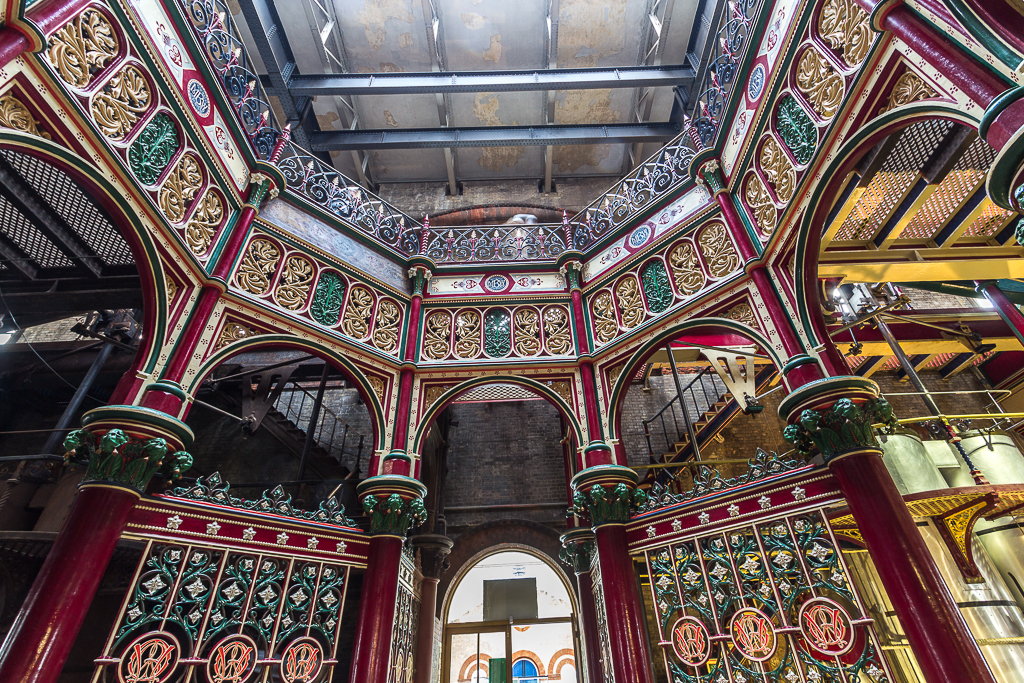

This is a much better, and ultimately much more fulfilling, way to view the world. Once again, no-one can exist without art or beauty. No-one. Even the people who profess to not care about these things in the slightest will listen to music, or watch media, or decorate their home.
Yet, at the same time, no-one can live on art alone. Even the most gifted artists need to clean out the fridge and ensure their cavity wall is properly insulated. Art for art’s sake is wonderful, but there is something I find slightly uncomfortable about art being compartmentalised.
Ironically, when art is only art, it becomes a product. Why would anyone buy a painting or concert tickets if not to purchase the enjoyment gained from it? Life becomes transactional, and it is ‘farmed’ in exhausted sitcoms or overused chords.
There is nothing wrong with art being a product, of course. And, indeed, art is often a byproduct not of business, but of passion – a pianist at home, for example, is certainly making art for its own sake, but not as a product. Yet the best expressions of art, taste and beauty come not from things intended to express them alone, but from beautifying our existence, something that is much more akin with our innate human temperament. Elaborately decorated door handles, carved oak chairs, tree-lined streets and so on.
We do still understand this to some extent. The Elizabeth Line in London is a very good example – this is an infrastructure project that exults its users, and turns the mundane act of travel into art. We simply need to expand this exultation beyond the flagship of all flagship projects, and into day-to-day life.
We must take pride in what we do, who we are, and where we live. Dress well, look after your home, enjoy the streets of your town. There is no room for cynical hatred in the world of pride, beyond what is necessary to bring about improvements, and it can be difficult to live in it if others around you do not. An iron will is required – cast iron, of course, moulded into floral decorations.
But it is essential to do this, for such cultural changes have to be bottom up. This is both a blessing and a curse – a blessing as anyone can be a part of them, and a curse as there is no one law or action that would bring the change about.
However, when the change is brought about, as I am sure it will be one day, the prize shall be quite extraordinary. A world where everything is beautiful is a world where everything is life.
 Home
Home 
Leave a comment